A landlord closes on a two-family rowhome in Mill Hill, schedules the city's rental inspection before the new tenant moves in, and passes. Sticker on the panel, license in hand, lease signed. Six months later a letter arrives referencing a state law the landlord has never heard of.
This is not a story about a bad actor cutting corners. It is what happens when two different governments each require their own certificate for the same rental unit, on two different timelines, and nothing in the closing process forces them to talk to each other. Trenton's own housing code and New Jersey's statewide lead-safe law both apply to the same older housing stock that makes the city attractive to investors in the first place. Clearing one does nothing for the other.
Two Governments, Two Papers, One Property
The Certificate of Housing Code Compliance is a City of Trenton requirement. The Division of Housing Inspections has to sign off before a residential property can change ownership, and the certificate covers zoning, fire safety, and smoke and carbon monoxide compliance under the city's own housing code. It is issued by the city, tied to the property, and required at sale.
The Lead-Safe Certification is a state requirement under P.L. 2021, c.182, codified at N.J.A.C. 5:28A. It has nothing to do with a sale. It applies to rental units built before 1978, is triggered by tenant turnover rather than a closing, and is enforced by the municipality on behalf of the state, not folded into the city's own inspection checklist. The New Jersey Department of Community Affairs is explicit that all rental dwelling units required to be inspected must be inspected for lead-based paint within two years of the law's effective date, which was July 22, 2022, meaning the first inspection window closed July 22, 2024, for any unit that had not already turned over a tenant.
Two agencies, two forms, two clocks. A property can be fully current on one and quietly expired on the other.
What the City Actually Requires
Trenton's municipal rental rules run on their own annual rhythm, separate from anything the state does:
- A Certificate of Housing Code Compliance must be obtained from the Division of Housing Inspections before any change of ownership of a residential property.
- The City of Trenton requires landlord rental registration before March 1 of each calendar year.
- Non-owner-occupied landlord licenses renew every January.
- Trenton's housing code requires a full housing code inspection for rented, non-owner-occupied structures once every five years, on top of the turnover inspections tied to each new tenant.
- A failed reinspection triggers a $50 fee for the second visit, though the first inspection and first reinspection remain free of charge.
None of this touches lead paint specifically. It is habitability, fire safety, and general code compliance, administered entirely at the municipal level.
What the State Requires, On Its Own Schedule
The lead-safe rule layers on top, and it is stricter about timing than most landlords expect. A lead-safe certification, once issued, is valid for two years. After that, the unit needs reinspection every three years, or at the next tenant turnover, whichever comes first. If a tenant moves out before the three-year mark, the turnover forces an earlier inspection regardless of when the last one happened.
The law explicitly does not apply to home sales. It is a rental-only requirement, which is exactly why it gets missed during a purchase: an investor closing on an occupied rowhome may see a clean sale transaction and a valid municipal CO, and reasonably assume the property is compliant across the board. New Jersey Realtors' own guidance for members confirms the law does not apply to home sales, which means the closing itself will not surface a lapsed or missing lead-safe certificate. That gap only becomes visible at the next turnover, and by then the clock has already been running.
One narrow exemption exists. A multiple dwelling that has been registered with the state for at least ten years, with no outstanding lead violations from its most recent cyclical inspection, is not subject to the same requirement. For most single-family and two-family rentals in Trenton's older sections, that exemption does not apply.
The stakes for missing it are real. Curren Environmental says noncompliance can carry fines of up to $1,000 per unit per week, a penalty structure built to make delay expensive rather than a minor administrative lapse.
| City Certificate of Housing Code Compliance | State Lead-Safe Certification | |
|---|---|---|
| Issued by | City of Trenton, Division of Housing Inspections | Municipal inspector or licensed lead evaluation contractor, under state law |
| Triggered by | Change of ownership | Tenant turnover, or every 3 years, whichever is sooner |
| Valid for | Until next required inspection cycle | 2 years if lead-safe |
| Renewal rhythm | Annual license renewal each January; registration by March 1 | Every 3 years, or sooner at turnover |
| Applies to | All residential rental property | Rentals built before 1978, with narrow exemptions |
Why Mill Hill and Chambersburg Feel This the Most
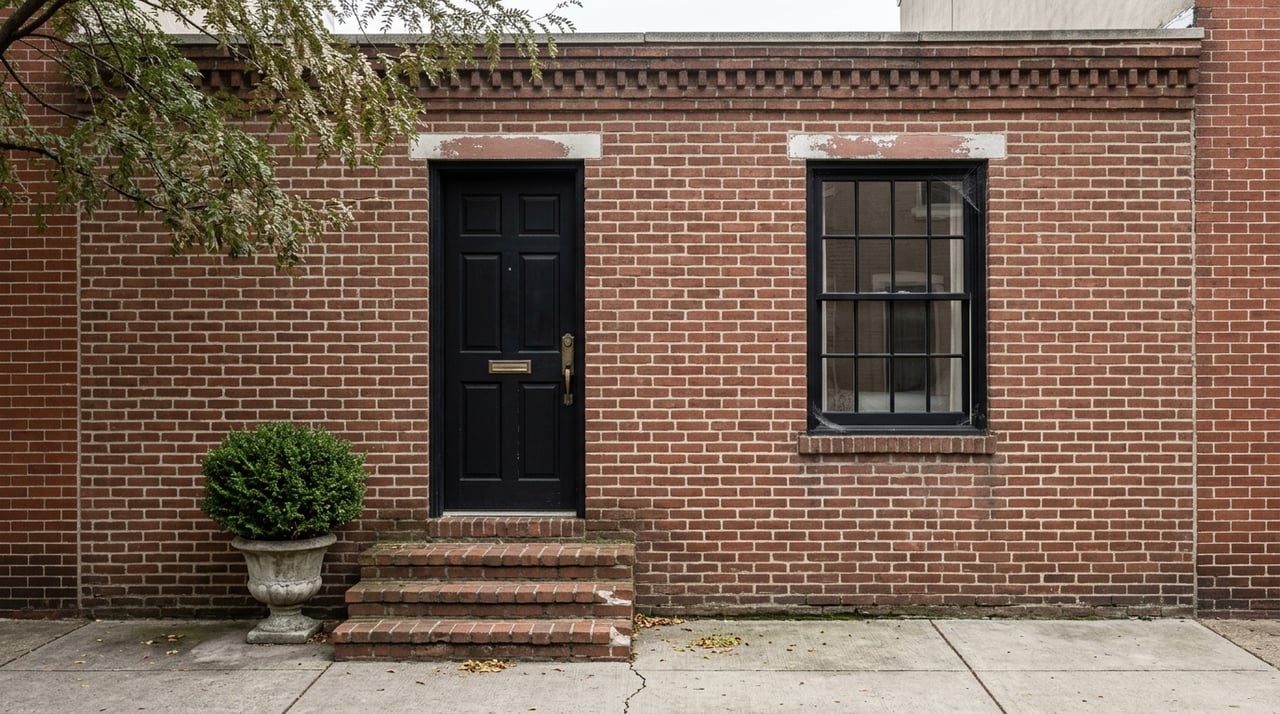
The two clocks matter most in exactly the neighborhoods investors are drawn to. Mill Hill's brick rowhomes and Chambersburg's mix of single-family and multi-family housing are prized by tenants for character and space, and both areas are dominated by housing built well before 1978. That is precisely the housing stock the lead-safe law targets, and precisely where a city CO alone will not tell an investor the full compliance picture.
Trenton's citywide numbers show why the rental math still draws investors despite the added paperwork. Over the three months ending May 2026, the median sale price across Trenton sat at $234,000, up 3.9 percent from the same period the year before, with homes taking an average of 66 days to sell and 121 homes closing in May alone. Prices low enough to make the rental math work are exactly why the compliance overhead matters: a modest purchase price does not offset a $1,000-per-unit-per-week fine if a lead-safe certificate lapses unnoticed.
The Order That Actually Avoids the Gap
For anyone buying a pre-1978 rental in Trenton, the sequence below keeps the two clocks from colliding:
- Before closing, ask the seller or listing agent whether the unit currently holds a valid lead-safe certification and request a copy.
- At closing, confirm the Certificate of Housing Code Compliance has been issued for the change of ownership, since the city requires it before the sale can proceed.
- Immediately after closing, check the certification's issue date against the two-year lead-safe validity window rather than assuming the sale reset the clock. It did not.
- Before any new tenant moves in, treat the lease signing as the lead-safe law's trigger point, not the city's rental inspection, and schedule accordingly if the certificate is close to expiring.
- Mark the five-year municipal housing code inspection cycle and the three-year lead-safe reinspection cycle separately on two different reminders, since they will rarely land on the same date.
- File landlord registration with the city before March 1 and renew the rental license every January, regardless of where the lead-safe clock currently stands.
Where the Two Clocks Collide
The moment this actually costs someone money is turnover. A landlord who has kept the municipal license current and passed every five-year housing inspection can still be sitting on an expired lead-safe certificate if a tenant moved out ahead of schedule. The city inspection does not check for it. The sale did not check for it. The only checkpoint is the turnover itself, and by the time a new lease is being signed, the fine clock may already be running.
A Few Direct Questions
Does passing Trenton's rental inspection mean I'm compliant with the state lead-safe law too? No. They are separate requirements administered under separate statutes. The city inspection covers general housing code compliance. The lead-safe certification is a distinct state requirement for pre-1978 rentals.
Does the lead-safe law apply when I buy the property, or only once I rent it out? Only to rentals. The law explicitly does not apply to home sales, so a purchase closing will not surface a lapsed lead-safe certificate on its own.
What if the building has been registered with the state for ten years with no violations? That specific combination, a multiple dwelling registered with the Department for at least ten years with no outstanding lead violations from its most recent cyclical inspection, is one of the law's narrow exemptions.
Buying a rental in Trenton can make sense on the numbers. Making it work over the long run means tracking two separate compliance calendars instead of assuming one certificate covers both. If you are weighing a purchase in Mill Hill, Chambersburg, or anywhere else in the city and want a clear read on what a specific property actually requires before you close, Christina Winka can walk through it with you. Let's Connect.
This article is general information, not legal, tax or financial advice. Consult a qualified professional about your situation.